Puerto Rico | La Isla Del Encanto #3
Puerto Rico Is Giving Away Its Coastline to Billionaires — Literally for Free.
While Russia Takes Land by Force.
— @JonathanDitren, March 19, 2026
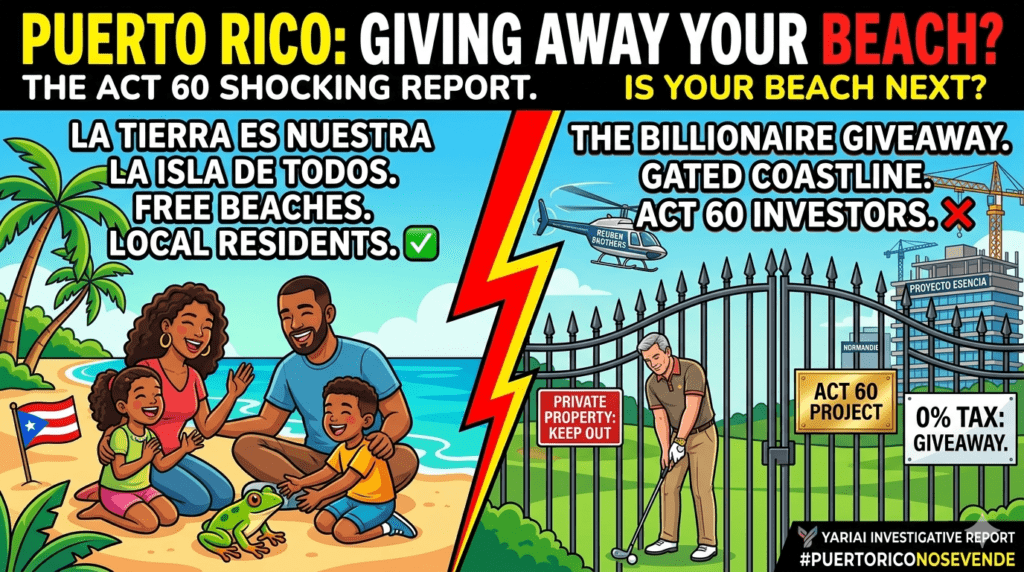
As a Puerto Rican, this frustrates me to the core. We grew up knowing one fundamental truth: la tierra es nuestra — the land belongs to the people. Our Constitution enshrines public access to beaches and the maritime-terrestrial zone. Yet the extremely wealthy always get it their way. Across more than two dozen coastal municipalities out of Puerto Rico’s 78 total — from Cabo Rojo to Fajardo, Aguadilla to Río Grande, San Juan to Humacao — the government is systematically handing prime coastal real estate to ultra-wealthy foreign investors and developers at little to no net cost to them. These are direct public subsidies worth hundreds of millions of dollars per project.
This is not development. This is privatization of our shores disguised as incentives. The original X post nailed the bitter irony perfectly: Russia, a nuclear superpower roughly 1,928 times larger than us, grabs territory through military force. Tiny Puerto Rico gives its coastline away for free through massive tax credits and 90–100% exemptions.
The Staggering Size Contrast
Russia’s land area: 17,098,246 km².
Puerto Rico’s land area: 8,870 km².
Russia is approximately 1,928 times larger.
As of early 2026, Russia controls roughly 19–20% of Ukraine’s territory (including Crimea and parts of Donbas seized since 2014, plus incremental gains). In 2025 alone, Russia gained about 0.8–0.9% of Ukraine’s total area through attritional warfare in places like Donetsk, with peace talks stalled. Meanwhile, Puerto Rico is subsidizing the transfer of economic control and physical access to its beaches to billionaires.
The Legal Machinery Enabling the Giveaways
The system runs on the Puerto Rico Incentives Code (Act 60-2019), which consolidated Act 22 (2012) and the Tourism Development Act (Act 74-2010, now Chapter 5):
- Act 60 Individual Investor Program: 0% Puerto Rico tax on capital gains, dividends, and interest for new residents — a magnet for crypto investors, hedge fund managers, and high-net-worth individuals that has fueled gentrification and displacement.
- Tourism & Mixed-Use Projects: 30–50% tax credits (often 40%) on eligible investment + 90–100% exemptions on income, property (CRIM), municipal, sales/use, and excise taxes for 10–15 years (renewable). These stack with federal Opportunity Zones and individual decrees (“double-dipping”).
The full 0% rate for new individual applicants ends December 31, 2026 (new decrees face 4% on certain income), but the entire program was extended through 2055. Existing holders keep every benefit. Projected revenue loss from Act 22 incentives alone: an estimated $18.4 billion by 2030. Tourism incentives have already cost hundreds of millions between 2020–2026. Public return on investment in flagship projects? As low as 3.2%.
Documented Mega-Projects: Names, Numbers, Companies, and Exact Incentives
1. Proyecto Esencia – Cabo Rojo (Punta Melones / Boquerón)
Developers: Reuben Brothers (British billionaires Simon and David Reuben, combined net worth ~$11.5 billion) + Three Rules Capital (Will Bennett and Roberto Ruiz Vargas) through Cabo Rojo Land Acquisition LLC.
Scale: $2 billion project on ~2,000 acres (1,549 cuerdas) spanning three miles of beachfront. 1,132 luxury residences ($2M–$20M each), 520 hotel units, two golf courses, private airport, K-12 school, spa. Expected opening: 2028.
Incentives: Nearly $498 million in tax credits (40% of $1.244 billion eligible investment) + 90–100% exemptions on CRIM, VAT, income, and municipal taxes (decree granted 2020, amended 2024).
Additional Facts: Reuben Brothers donated $76,800 to pro-development PACs (including “Salvemos a Puerto Rico”). The team has faced environmental lawsuits globally. Impacts: threatens mangroves, dry forests, coral reefs, and public beach access. Median home prices in Cabo Rojo rose 54% (2019–2024). Community return: minimal local jobs vs. massive ecological and cultural loss. Fierce opposition (#NoaEsencia, Puerto Rico No Se Vende, Marea Ecologista).
2. Oro Residences (Marriott Condo-Hotel) – San Juan (Hato Rey “Golden Mile”)
Developers: HRC Holding QOZB LLC (Act 22 beneficiaries: Paul Napoli, Marie Napoli, Hunter Shkolnik, Marc Grossman, Ari Kresch) + Stonecrest Partners (David Weibel and Michael Schoenfeld — also Act 22 beneficiaries).
Scale: 220,000 sq ft historic building converted into luxury condo-hotel. Units from $745,000 to over $2M.
Incentives: Full Act 60 tourism decree (October 2023) + up to 75% construction tax exemption + Opportunity Zone benefits.
Impact: Accelerates gentrification in the historically working-class former El Fanguito/Tokio neighborhoods. Part of a documented pattern of Act 22 holders coordinating to hoard properties and speculate.
3. Hotel Normandie Redevelopment – San Juan (Escambrón / Old San Juan area)
Developer: Ishay Group (Act 22 beneficiary Ezra “Eddie” D. Ishay) through Normandie OZ LLC and Casa General LLC.
Scale: $100M+ investment; 30-year public lease on historic hotel plus portion of Sixto Escobar Park.
Incentives: Full Act 60 tourism decree (July 2024).
Impact: Encroaches on public park and maritime-terrestrial zone. Strong opposition from Escambrón Unido over lost beach access and privatization of space used by locals for generations.
4. Moncayo (Auberge Resorts) – Río Grande / Fajardo (between El Yunque and Puerto del Rey marina)
Developers: Juniper Capital (Carter Redd) with ties to EB5 United/Capital United and Stedem Family Ventures (Act 22 beneficiaries Bradford “Brad” Stedem and Brian Scott Fuller).
Scale: 1,100-acre master-planned community. 400 residences ($3M+ each), Auberge Resort (68 rooms/villas), 18-hole golf course, organic farm, estates.
Incentives: Act 60 export/tourism benefits + Opportunity Zones.
Impact: Positioned as the “Palm Beach of Puerto Rico” for the global ultra-wealthy. Built near former U.S. military testing grounds with toxic metals. Construction underway and already reshaping the entire eastern coastline.
5. Four Seasons Resort & Private Residences – Bahía Beach, Río Grande (Northeast Coast)
Developer: Paulson Puerto Rico (John Paulson) with Interlink and Muñoz Holdings.
Scale: Rebrand of former St. Regis on 483-acre private nature reserve with two miles of beachfront. $40M resort upgrade + $200M+ residential investment. 85 branded residences.
Incentives: Full ecosystem of Act 60 individual + tourism provisions.
Additional Documented Cases Across the Island
- Cliff Corp 86-Villa Development – Aguadilla (Borinquen Ward): Act 60 decree 2022. EPA fined $50,000 for Clean Water Act violations.
- Palmas Town Center – Humacao (Palmas del Mar, 3,000-acre resort community): Opportunity Zone fund led by Act 22 beneficiary Shawn L. Hanson.
- Widespread smaller-scale activity in Rincón, Isabela, Vieques, Culebra, Dorado (Ritz-Carlton expansions via PRISA Group), Luquillo, and Ocean Park — where Act 22 beneficiaries combine individual decrees with tourism projects, driving gentrification protests.
The pattern is systemic and expanding rapidly. The same small group of Act 22 beneficiaries are layering multiple decrees for maximum extraction.
A Call to Action: Reclaim Our Land Rights
As Puerto Ricans, we have rights — to our beaches, our communities, our future. These “free” giveaways to named billionaires and investors (Reuben Brothers, John Paulson, Ezra Ishay, the Napoli group, David Weibel, Brad Stedem, and others on public record) undermine that sovereignty. The extremely wealthy always get it their way — but not without a fight.
This is not anti-development. It is pro-Puerto Rican development.
Our land is NOT for sale — and it should never have been given away for free.
Demand full transparency of ALL decrees from the Tourism Company and DDEC.
Demand environmental impact reforms and community veto power on coastal projects.
Demand incentives redirected toward affordable housing and local ownership.
Share this report. Tag your representatives. Join Puerto Rico No Se Vende, Marea Ecologista, and local movements.
#PuertoRicoNoSeVende #DefiendeNuestraCosta #NoaEsencia
What do you think? How much longer will we allow this? Leave your comment below and share with every Puerto Rican you know.